If you suddenly need to use the restroom while traveling in Japan, you may wonder:
“Where can I use one?”
“Do I have to pay?”
“Can I use a convenience store restroom without buying anything?”
In short, you can find restrooms in many places in Japan, including train stations, department stores and shopping malls, parks, and some convenience stores.
And you almost never have to pay a fee just to use one.
That said, access varies in some places. Convenience stores, for example, do not all make their restrooms available to the public.
There are also a few things that can be confusing the first time you use a toilet in Japan, such as what to do with toilet paper, the Japanese flush labels “大” and “小,” and Washlet controls.
I’ll walk you through where to look for a restroom in Japan and how to use one once you’re inside.
Where Can You Find a Restroom While Traveling in Japan?
If you need a restroom while you’re out exploring, these are the main places to look:
- Train stations
- Department stores and shopping malls
- Tourist attractions
- Public facilities
- Cafes and restaurants you are already using
- Some convenience stores
- Some drugstores
- Parks and public restrooms
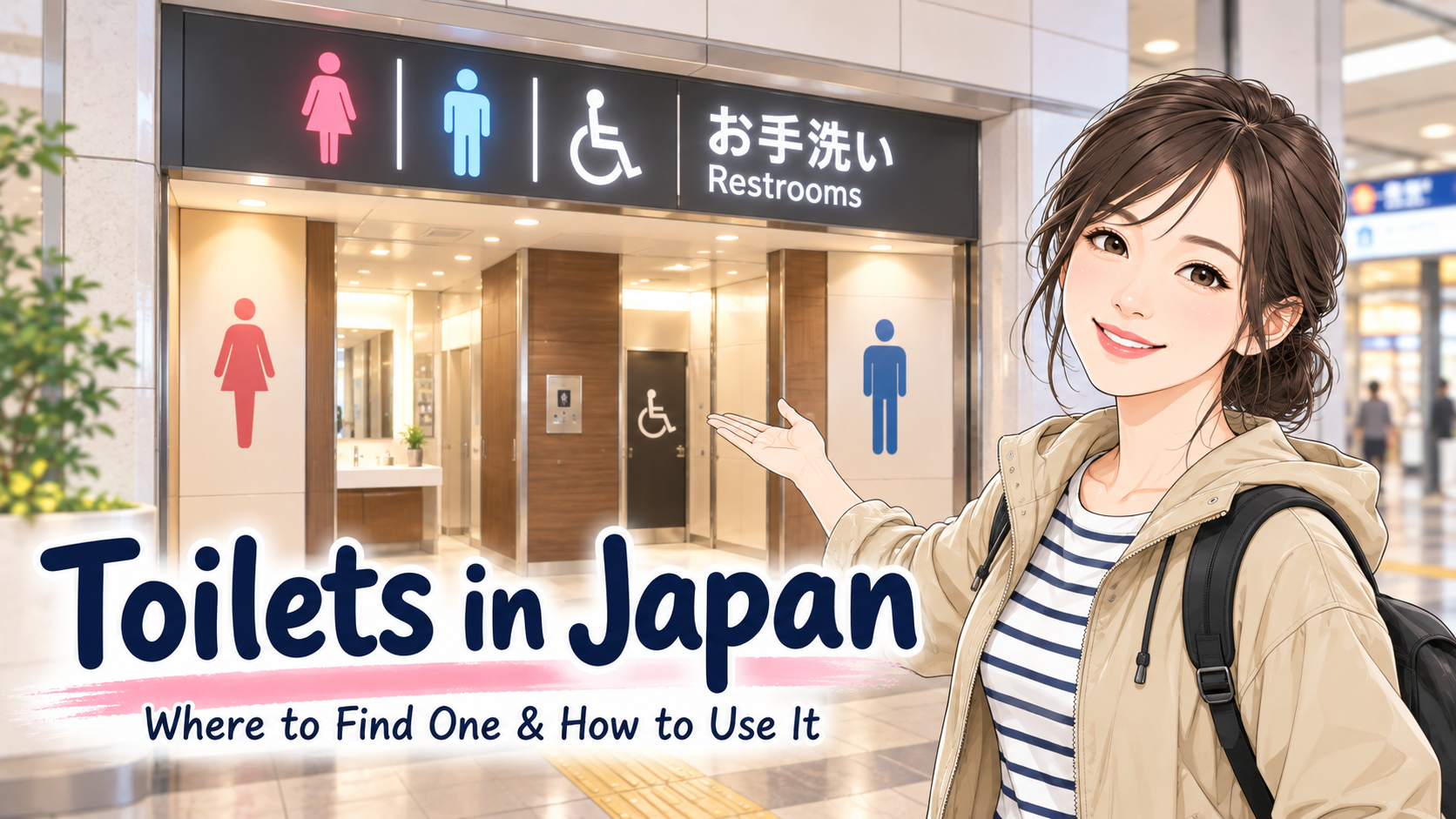
In Japan, you may see the word
「トイレ」
or
「お手洗い」
on restroom signs.
You can also look for male and female restroom pictograms or English signs such as “Toilets” or “Restrooms.”
Do Toilets in Japan Cost Money?
In Japan, you almost never have to pay a fee just to use a restroom.
So you do not need to worry about always carrying coins just for toilets during your trip.
There are a few exceptions.
For example, oasis@akiba, a public restroom operated by Chiyoda City on the east side of Akihabara Station in Tokyo, costs ¥100 per person.
It is free for people with disabilities and children of elementary-school age or younger.
Paid public restrooms like this are the exception in Japan.
Can You Use Convenience Store Restrooms?
You will see convenience stores everywhere while traveling in Japan.
Some have restrooms you can use, but not every convenience store makes its restroom available to the public.
Rules vary by location, so check the signs inside the store or near the restroom.
For example:
- You can use the restroom without asking staff
- You need to ask a staff member first
- The restroom is not open to the public
Lawson says it began opening its store restrooms to the public in 1997, and as of 2026, around one million people use Lawson restrooms across Japan each day.
The store itself covers the cost of cleaning, supplies, and water.
At convenience stores in central areas such as Shinjuku, Shibuya, Ginza, and Ikebukuro, many stores do not have restrooms for customers or limit them to staff only.
In central Tokyo, do not rely on convenience store restrooms. Look for restrooms at stations or shopping facilities instead.
Should You Buy Something After Using a Convenience Store Restroom?
This is more about courtesy than an actual rule.
In Japan, some people buy a drink, gum, a snack, or something else small after using a convenience store restroom.
But there is no nationwide rule saying:
“If you use the restroom, you must buy something.”
A Lawson survey found that around 40% of restroom users left without making a purchase.
So think of buying something as a small courtesy to the store, not a restroom fee.
Do Japanese Toilets Have Toilet Paper?
At train stations, department stores, shopping malls, and similar places, toilet paper is normally provided.
However, some outdoor restrooms, especially those in parks, may not have toilet paper.
I’ll explain park restrooms in more detail later.
Flush Used Toilet Paper Down the Toilet
In Japan, used toilet paper goes into the toilet and is flushed.
In some countries and regions, used toilet paper is placed in a trash bin instead. You do not need to do that in Japan.
If you see a small sanitary bin inside a women’s restroom stall, it is for menstrual products and similar waste, not for used toilet paper.
Do not flush the following items:
- Sanitary pads
- Tampons
- Diapers
- Regular tissues
Dispose of menstrual products in the sanitary bin provided.
For diapers, use a trash bin only if the facility says diapers may be disposed of there. Otherwise, take them with you.
Even toilet paper can cause a clog if you flush too much at once.
What Do the “大” and “小” Flush Labels Mean?
On some Japanese toilets, the flush lever or buttons are labeled:
「大」
「小」
These indicate different flush volumes.
The exact use can vary slightly by manufacturer and model, but if this is your first time using a toilet in Japan, this is an easy way to remember them:
- 大: For solid waste or toilet paper
- 小: For urine only
How Do You Use a Washlet?
One thing that can be confusing for first-time visitors is the row of buttons beside the toilet seat or on the wall.
These are the controls for what is commonly called a “Washlet” in Japan.
Technically, WASHLET is a registered trademark of TOTO. The generic term is a bidet toilet seat.
However, people in Japan often use “Washlet” in everyday conversation, so I’ll use that term here as well.

If it is your first time using one, start by finding the 「止」 (Stop) button.
Here is the basic process:
- Sit down and use the toilet
- Press 「おしり」 (Rear) or 「ビデ」 (Front/Bidet)
- Adjust 「水勢」 (Pressure) if needed
- Press 「止」 (Stop) when you are finished
- Wipe with toilet paper
- Flush the toilet
「おしり」 is the rear-wash function.
「ビデ」 is the front-wash function for women.
Depending on the model, you may also be able to adjust the water pressure, spray position, and temperature.
You do not need to use every button.
The Washlet’s 「止」 (Stop) button only stops the washing water.
It does not flush the toilet.
The way you flush can vary depending on the toilet.
- Buttons marked 「大」 or 「小」
- A button marked 「流す」
- A lever beside the toilet
- A sensor you wave your hand over
- An automatic flush that activates when you stand up
If the toilet does not flush automatically, look for 「流す」, 「大」, or 「小」.
Some public restrooms in Japan have buttons labeled:
「呼出」 (Call)
「非常」 (Emergency)
These are used to call for help if you feel ill or need assistance inside the restroom.
They are not flush buttons.
Foreign visitors sometimes mistake them for flush controls, so check the wording or symbol before pressing a button.
Who Are Multipurpose and Accessible Restrooms For?
At train stations and shopping facilities, you may see a larger restroom separate from the regular men’s and women’s restrooms.
In Japan, you may see signs such as:
「多目的トイレ」 (Multipurpose Toilet)
「多機能トイレ」 (Multifunction Toilet)
「バリアフリートイレ」 (Barrier-Free Toilet)
The exact facilities vary, but these restrooms are designed to be easier to use for people such as:
- Wheelchair users
- People who need ostomy facilities
- People who need assistance
- Older adults
- People traveling with babies or small children
Depending on the restroom, you may find grab bars, ostomy facilities, baby chairs, diaper-changing tables, or larger changing beds.
Please give priority to people who need these facilities.
Park Restrooms Can Be a Little Different
Compared with restrooms at train stations or shopping malls, the facilities in park restrooms can vary quite a lot.
In particular:
- Some parks do not provide toilet paper
- Some restrooms do not have Washlets
- Some parks still have Japanese-style squat toilets
Some Parks Do Not Provide Toilet Paper at All
If there is no toilet paper in a park restroom, it does not always mean:
“They just ran out.”
Some local governments intentionally do not provide toilet paper in certain park restrooms.
For example, Tama City in Tokyo does not provide toilet paper in the parks it manages.
The city previously supplied it, but stopped after repeated incidents of toilet paper being stolen or set on fire.
In Tokorozawa City, Saitama Prefecture, as of September 2026, toilet paper is provided at only four city-managed parks. Other city-managed parks with restrooms do not provide it.
Tokorozawa City advises visitors to bring flushable tissues when using those park restrooms.
So if you think you may use a park restroom during your trip,
carrying a small pack of flushable tissues in your travel bag is a good idea.
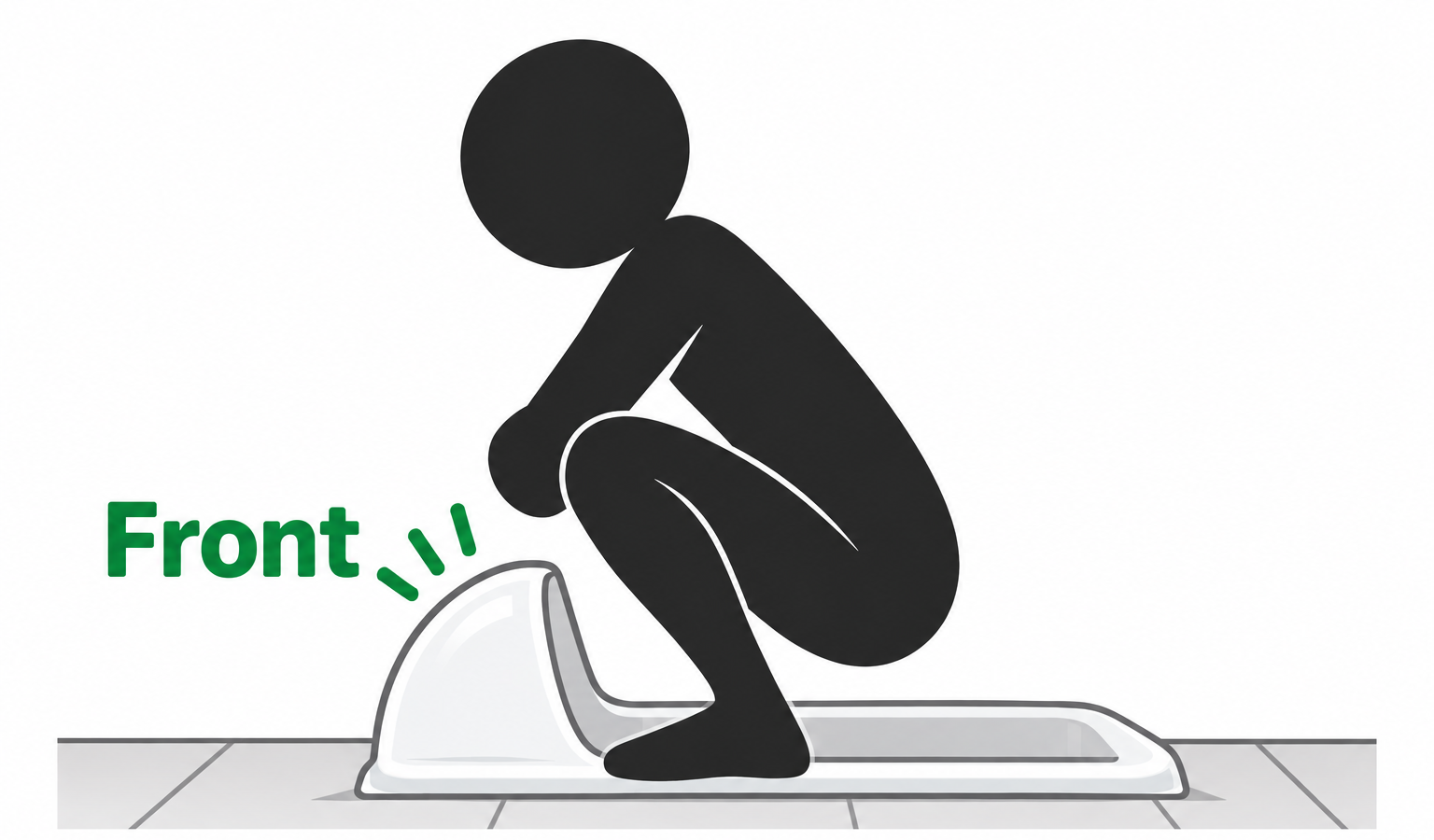
Some Parks Still Have Japanese-Style Squat Toilets
Western-style toilets are now widely used in Japan, but some parks and older facilities still have Japanese-style squat toilets.
For example, as of September 2026, the general-use men’s and women’s toilets at Saga Park in Kyoto are squat toilets.
You do not sit on a squat toilet.
Face the raised end, stand with one foot on each side of the toilet, and squat down.
Japanese Toilets: What to Remember
Here are the most important things to remember during your trip:
- You almost never have to pay a fee just to use a restroom in Japan
- Some convenience stores do not make their restrooms available to the public
- Flush used toilet paper down the toilet
- Do not flush sanitary products, diapers, or regular tissues
- If you use toilet paper, remember to use 「大」 when flushing
- If you may use park restrooms, carrying flushable tissues is a good idea
That’s about all you need to remember to feel comfortable if you suddenly need a restroom while traveling in Japan.
When I traveled in Egypt, I had a surprisingly hard time finding toilets I could use.
I struggled to find them even in Cairo, and it was even more difficult in Alexandria.
Ready to plan your trip?
Find flights, hotels, transportation, tours, and attraction tickets below.
Flights
Search Flights to Japan
Hotels
Find Hotels in Japan
Airport Transfer
Book an Airport Transfer
Private Car Charter
Travel with a Private Driver
Tours & Experiences
Explore Tours in Japan
Attraction Tickets
Find Tickets in Japan

Explore tours, experiences, and attraction tickets to discover even more ways to enjoy Japan.
Why not take a look and see what’s waiting for you in Japan?