

- Oita Prefecture to Introduce Accommodation Tax on June 1, 2027 — ¥100–¥2,000 per Night
- Tokyo’s Accommodation Tax Will Change to 3% from April 1, 2027
- Okinawa Prefecture to Introduce a 2% Accommodation Tax on February 1, 2027
- ALL SHIKOKU Rail Pass Prices to Increase, Reserved Seats Included from December 1, 2026
- Shuri Castle’s Main Hall Reopens on November 23, 2026 — Advance Reservations Required for Interior Visits
- Nozomi Shinkansen: All Seats Reserved on Select Peak Travel Dates Starting November 21, 2026
- Japan’s Tax-Free Shopping Switched to a Refund System on November 1, 2026
- JAPAN RAIL PASS Prices Increased at Overseas Travel Agencies on October 1, 2026
- Japan’s Departure Tax Increased to ¥3,000 on July 1, 2026
- Japan Increased Visa Fees on July 1, 2026
- Japan Limits Power Banks to Two per Passenger from April 24, 2026
- Hokkaido Introduced an Accommodation Tax Across the Prefecture on April 1, 2026
- Kyoto City’s Accommodation Tax Increased on March 1, 2026
- Miyagi, Hiroshima, and Nagano Prefectures Introduced Accommodation Taxes in 2026
Oita Prefecture to Introduce Accommodation Tax on June 1, 2027 — ¥100–¥2,000 per Night
Starting June 1, 2027, Oita Prefecture will introduce a new accommodation tax for stays at hotels, ryokan, and other lodging facilities.
Popular destinations such as Beppu Onsen and Yufuin Onsen will also be covered by the new tax.
The accommodation tax will be calculated per person, per night, based on the accommodation rate, as follows:
- Under ¥5,000: ¥100
- ¥5,000 to under ¥20,000: ¥200
- ¥20,000 to under ¥100,000: ¥500
- ¥100,000 or more: ¥2,000
The tax is calculated based on the accommodation rate, including service charges but excluding meals and consumption tax.
The tax applies to hotels, ryokan, simple lodging facilities, and private vacation rentals (minpaku).
Even if your accommodation rate is under ¥5,000 per person, per night, the tax is ¥100 as long as you are paying for the stay.
The tax is collected by the lodging facility. If it is not included in your booking price, you will need to pay it separately at the property.
When booking accommodation in Oita Prefecture, check whether the accommodation tax is included in the quoted price.
Official information: Oita Prefectural Government | Accommodation Tax System
Tokyo’s Accommodation Tax Will Change to 3% from April 1, 2027
Starting April 1, 2027, Tokyo will change its accommodation tax for stays at hotels, ryokan, and other lodging facilities within Tokyo.
Previously, stays costing ¥10,000 or more per person, per night were subject to a flat tax of ¥100 or ¥200, depending on the accommodation rate. Under the new system, the tax will be 3% of the accommodation rate.
The new accommodation tax will be calculated per person, per night, as follows:
- Under ¥13,000: No accommodation tax
- ¥13,000 or more: 3% of the accommodation rate
The tax is calculated based on the accommodation rate, including service charges but excluding meals and consumption tax.
The tax will also apply to private vacation rentals (minpaku) and simple lodging facilities, in addition to hotels and ryokan.
The new tax will apply to stays on or after April 1, 2027, even if you made your reservation before that date.
When booking accommodation, check the price breakdown to see whether the accommodation tax is included. If it is not included, you will need to pay it separately at the lodging facility.
Official information: Tokyo Metropolitan Government | Accommodation Tax Revision
Okinawa Prefecture to Introduce a 2% Accommodation Tax on February 1, 2027
Starting February 1, 2027, Okinawa Prefecture will introduce a new accommodation tax for stays at hotels, ryokan, and other lodging facilities.
The tax will apply throughout Okinawa Prefecture, including popular destinations such as Naha, Onna Village, Ishigaki Island, and Miyako Island.
The accommodation tax will be 2% of the accommodation rate per person, per night, with a maximum of ¥2,000.
The tax is calculated based on the accommodation rate, including service charges but excluding meals and consumption tax. The accommodation rate is rounded down to the nearest ¥1,000 before the 2% tax is applied.
For example, the accommodation tax per person, per night will be:
- Accommodation rate of ¥8,500: ¥160
- Accommodation rate of ¥20,000: ¥400
- Accommodation rate of ¥100,000 or more: ¥2,000 (maximum)
The tax applies to hotels, ryokan, simple lodging facilities, and private vacation rentals (minpaku).
The new accommodation tax will apply to stays on or after February 1, 2027, even if you made your reservation before that date.
The tax is collected by the lodging facility. If it is not included in your booking price, you will need to pay it separately at the property.
When booking accommodation in Okinawa Prefecture, check whether the accommodation tax is included in the quoted price.
Official information: Okinawa Prefectural Government | Accommodation Tax System
ALL SHIKOKU Rail Pass Prices to Increase, Reserved Seats Included from December 1, 2026
Starting December 1, 2026, the prices and conditions of the ALL SHIKOKU Rail Pass, a rail pass for international visitors traveling around Shikoku, will change.
The new adult prices are:
- 3-day pass: ¥12,000 → ¥15,000
- 7-day pass: ¥20,000 → ¥23,000
Children’s passes cost half the adult price. The new prices apply to passes sold on or after December 1, 2026.
Under the new rules, you will also be able to use Ordinary Class reserved seats on limited express trains operated by JR Shikoku and Tosa Kuroshio Railway, among others, at no additional charge.
However, to use a reserved seat, you must reserve your seat and obtain a reserved-seat ticket before boarding. The ticket counters and machines available for seat reservations vary depending on how you purchased your pass.
The locations where you can purchase or exchange the pass will also change.
- Kotohira Station: Sales of passes will end on November 30, 2026. The revised pass will not be sold or exchanged here.
- Nippon Travel Agency TiS Okayama Branch: Exchanges of the revised pass will end.
You can still purchase the revised pass within Japan at Takamatsu, Matsuyama, Tokushima, and Kochi stations, as well as designated JR Shikoku Tour branches.
However, exchange orders issued under the previous system by November 30, 2026, can still be exchanged at Kotohira Station and the TiS Okayama Branch until February 28, 2027.
If you plan to travel around Shikoku by train, check how the prices and conditions differ depending on your purchase date, and confirm where you can collect your pass.
Official information: JR Shikoku | ALL SHIKOKU Rail Pass Price and Rule Changes (English PDF)
Shuri Castle’s Main Hall Reopens on November 23, 2026 — Advance Reservations Required for Interior Visits
Shuri Castle’s Main Hall in Okinawa, which was destroyed by fire in 2019, has been reconstructed and will reopen to the public at noon on November 23, 2026.
Visitors will be able to view the interior of the reconstructed Main Hall, but a timed reservation system will be introduced to manage crowds and ensure visitor safety.
Reservation requirements differ depending on whether you want to enter the Main Hall or just view it from the outside.
- Visit the Main Hall interior: A timed reservation in 30-minute intervals is required.
- View the Main Hall exterior only: No advance reservation is required.
Even if you only want to view the Main Hall from the outside, you still need an admission ticket for the paid area of Shuri Castle Park.
Starting November 23, 2026, admission prices will be ¥1,000 for adults, ¥760 for high school students, and ¥370 for elementary and junior high school students. Children under 6 can enter free of charge. There is no additional fee for reserving a time slot to visit the Main Hall interior.
If you want to visit the Main Hall interior, select your preferred date and time through the official Shuri Castle Park reservation website.
Same-day reservations may be available if time slots remain, but you may not be able to enter at your preferred time.
If you plan to visit Shuri Castle, book early once your travel dates are confirmed.
Official information: Shuri Castle Park | Main Hall Reservations and Admission Fees (English)
Nozomi Shinkansen: All Seats Reserved on Select Peak Travel Dates Starting November 21, 2026
Nozomi trains on the Tokaido and Sanyo Shinkansen lines will operate with reserved seats only during busy travel periods, including the New Year holidays and three-day weekends.
This applies to all Nozomi trains between Tokyo and Hakata (Fukuoka). No non-reserved seats will be available during these periods.
The upcoming dates are:
- November 21–23, 2026
- December 25, 2026 – January 5, 2027 (New Year holidays)
- January 9–11, 2027
- March 20–22, 2027
If you want a seat on a Nozomi train during these periods, you need to reserve one in advance.
Other Shinkansen services, including Hikari and Kodama, will continue to offer non-reserved seats as usual.
You can book reserved seats through Smart EX or purchase tickets at station ticket machines. Once you know your travel dates, book early.
Official information: JR Central | Nozomi Reserved-Seat-Only Travel Periods
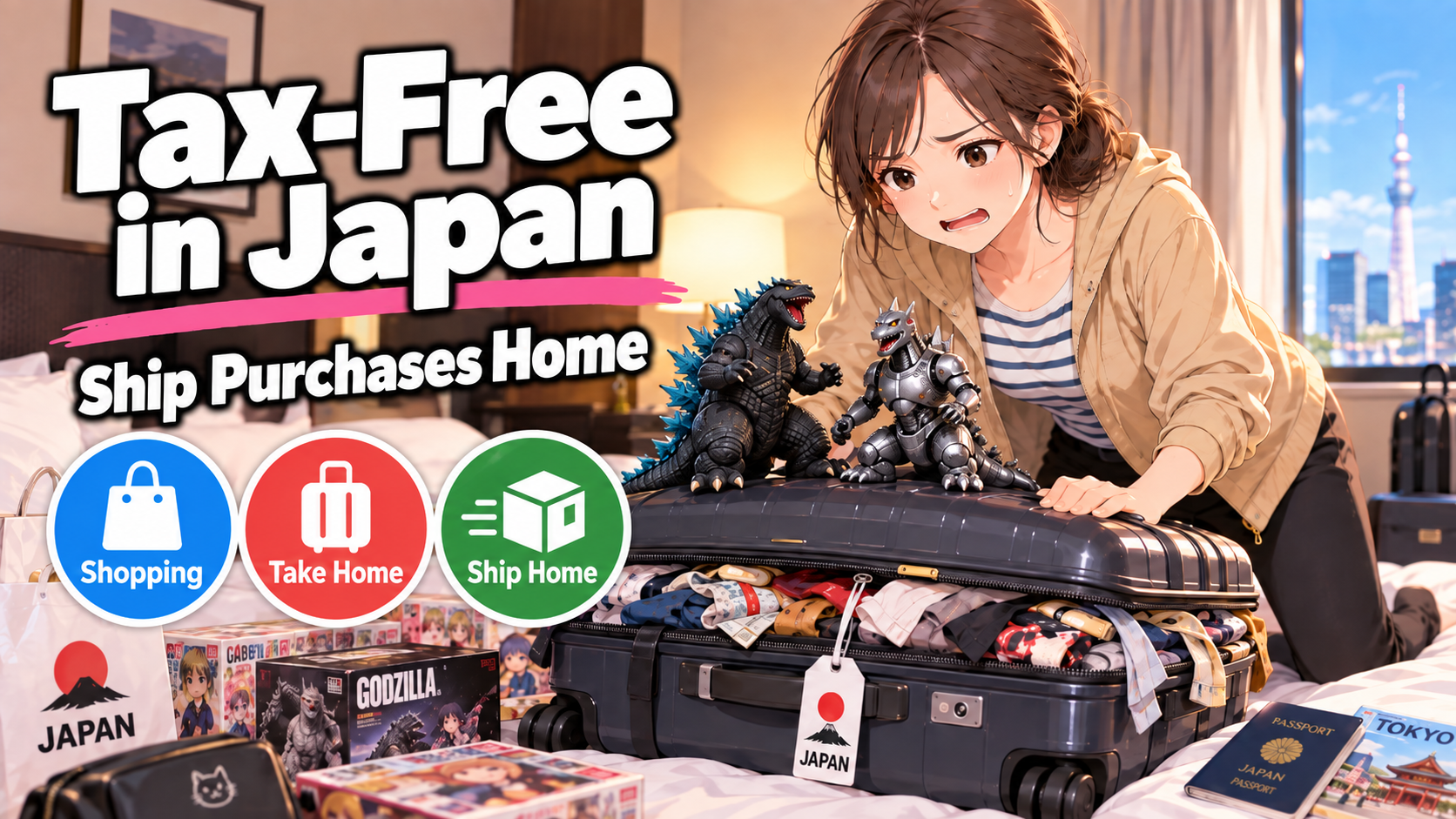
Japan’s Tax-Free Shopping Switched to a Refund System on November 1, 2026
On November 1, 2026, Japan introduced a new refund-based Tax-Free shopping system for eligible international visitors.
Previously, you could buy items at Tax-Free stores without paying Japanese consumption tax upfront. Under the new system, you first pay the full price, including consumption tax.
When you leave Japan, Customs confirms that you are taking your purchases out of the country. After this confirmation, the Tax-Free store or its refund provider refunds the amount equivalent to the consumption tax. Refund methods and processing times vary by store.
You must leave Japan within 90 days of the purchase date and complete the Customs confirmation procedure at a tax-free procedure terminal or through another approved method before checking your baggage with the airline.
For more details about Tax-Free shopping requirements and procedures, see our guide below.
Official information: Japan Tourism Agency | New Tax-Free Shopping System
JAPAN RAIL PASS Prices Increased at Overseas Travel Agencies on October 1, 2026
On October 1, 2026, the prices of the JAPAN RAIL PASS, which allows travelers to use JR trains throughout Japan, changed.
The price increase applies to purchases made through authorized JR sales agents and travel agencies overseas.
If you purchase your pass directly through the official online booking service, JAPAN RAIL PASS Reservation, the previous prices are still in effect.
Here are the prices for adult Ordinary Class passes:
- 7-day pass: Official website ¥50,000 / Overseas agents ¥53,000
- 14-day pass: Official website ¥80,000 / Overseas agents ¥84,000
- 21-day pass: Official website ¥100,000 / Overseas agents ¥105,000
Prices for Green Car passes have also increased when purchased through overseas agents.
For adult Ordinary Class passes, buying directly from the official website currently costs ¥3,000–¥5,000 less than buying through an authorized overseas agent.
However, the official website’s previous prices are being maintained only for a limited time. Check the latest prices on the official price page before purchasing.
Official information: JAPAN RAIL PASS Official Website | Types and Prices
Japan’s Departure Tax Increased to ¥3,000 on July 1, 2026
On July 1, 2026, Japan increased its International Tourist Tax (departure tax) from ¥1,000 to ¥3,000 per person.
This tax generally applies to both Japanese and foreign travelers leaving Japan by air or sea.
The tax is usually included in your flight or ship ticket price, so you do not need to pay it separately at the airport.
Children under 2 years old and certain other travelers are exempt.
Official information: National Tax Agency | International Tourist Tax
Japan Increased Visa Fees on July 1, 2026
On July 1, 2026, Japan increased its visa issuance fees.
The main changes are:
- Single-entry visa: Approximately ¥3,000 → ¥15,000
- Multiple-entry visa: Approximately ¥6,000 → ¥30,000
The new fees apply to applications accepted by Japanese embassies and consulates abroad on or after July 1, 2026.
However, if you are eligible for visa-free entry to Japan, you do not need to obtain a visa for a short sightseeing trip.
Visa fees may vary depending on your nationality and purpose of travel. If you need a visa, check the official website of the Japanese embassy or consulate where you plan to apply for the applicable fee.
Official information: Ministry of Foreign Affairs of Japan | Visa Fees
Japan Limits Power Banks to Two per Passenger from April 24, 2026
On April 24, 2026, Japan introduced new rules for carrying power banks on aircraft.
The main changes are:
- You can bring up to two power banks per passenger (maximum 160Wh each) in your carry-on baggage.
- Using a power bank to charge a smartphone or other device during the flight is prohibited.
- Charging a power bank using an aircraft’s onboard power supply is also prohibited.
- Power banks remain prohibited in checked baggage.
These rules apply to airlines including ANA, JAL, and Peach, and cover domestic flights within Japan and international flights to and from Japan.
Before flying, check the number and capacity of the power banks you plan to bring.
Official information: Ministry of Land, Infrastructure, Transport and Tourism | Power Bank Carry-On Rules
Hokkaido Introduced an Accommodation Tax Across the Prefecture on April 1, 2026
On April 1, 2026, Hokkaido introduced a new accommodation tax for stays at hotels, ryokan, and other lodging facilities throughout the prefecture.
The tax applies to accommodations in destinations across Hokkaido, including Sapporo, Hakodate, Otaru, Furano, and Niseko.
Hokkaido’s accommodation tax is calculated per person, per night, based on the accommodation rate, as follows:
- Under ¥20,000: ¥100
- ¥20,000 to under ¥50,000: ¥200
- ¥50,000 or more: ¥500
The tax is calculated based on the accommodation rate, including service charges but excluding meals and consumption tax.
The tax applies to hotels, ryokan, simple lodging facilities, and private vacation rentals (minpaku).
However, some municipalities, including Sapporo, Hakodate, and Otaru, also charge their own accommodation taxes, so the total amount you pay may be higher than the amounts listed above.
For example, in Sapporo, if your accommodation rate is under ¥20,000 per person, per night, you will pay a total accommodation tax of ¥300: ¥100 to Hokkaido Prefecture and ¥200 to Sapporo City.
The tax is collected by the lodging facility. If it is not included in your booking price, you will need to pay it separately at the property.
When booking accommodation in Hokkaido, check whether the accommodation tax is included in the quoted price and whether the municipality where you are staying charges an additional accommodation tax.
Official information: Hokkaido Prefectural Government | Accommodation Tax Information (English)
Kyoto City’s Accommodation Tax Increased on March 1, 2026
On March 1, 2026, Kyoto City revised its accommodation tax, which applies to stays at hotels, ryokan, and other lodging facilities within the city.
The tax is calculated per person, per night, based on the accommodation rate, including service charges but excluding meals and consumption tax.
- Under ¥6,000: ¥200
- ¥6,000 to under ¥20,000: ¥400
- ¥20,000 to under ¥50,000: ¥1,000
- ¥50,000 to under ¥100,000: ¥4,000
- ¥100,000 or more: ¥10,000
If the accommodation tax is not included in your booking price, you will need to pay it separately at your hotel or other lodging facility.
When booking accommodation in Kyoto City, check whether the accommodation tax is included in the quoted price.
Official information: Kyoto City Official Travel Guide | Accommodation Tax Changes
Miyagi, Hiroshima, and Nagano Prefectures Introduced Accommodation Taxes in 2026
In 2026, Miyagi, Hiroshima, and Nagano prefectures introduced new accommodation taxes.
In all three prefectures, the tax generally applies when the accommodation rate is ¥6,000 or more per person, per night, excluding meals and consumption tax.
The start dates and accommodation tax amounts are as follows:
- Miyagi Prefecture: From January 13, 2026 / ¥300 per person, per night
- Hiroshima Prefecture: From April 1, 2026 / ¥200 per person, per night
- Nagano Prefecture: From June 1, 2026 / Generally ¥200 per person, per night (through May 31, 2029)
The taxes apply to hotels, ryokan, simple lodging facilities, and private vacation rentals (minpaku).
However, some municipalities in Nagano Prefecture, including Matsumoto City, Karuizawa Town, and Hakuba Village, have their own accommodation tax systems, so the actual amount may differ.
The tax is collected by the lodging facility. If it is not included in your booking price, you will need to pay it separately at the property.
When booking accommodation in these areas, check whether the accommodation tax is included in the quoted price.
Official information:
Miyagi Prefectural Government | Accommodation Tax
Hiroshima Prefectural Government | Accommodation Tax Overview
Nagano Prefectural Government | Accommodation Tax