
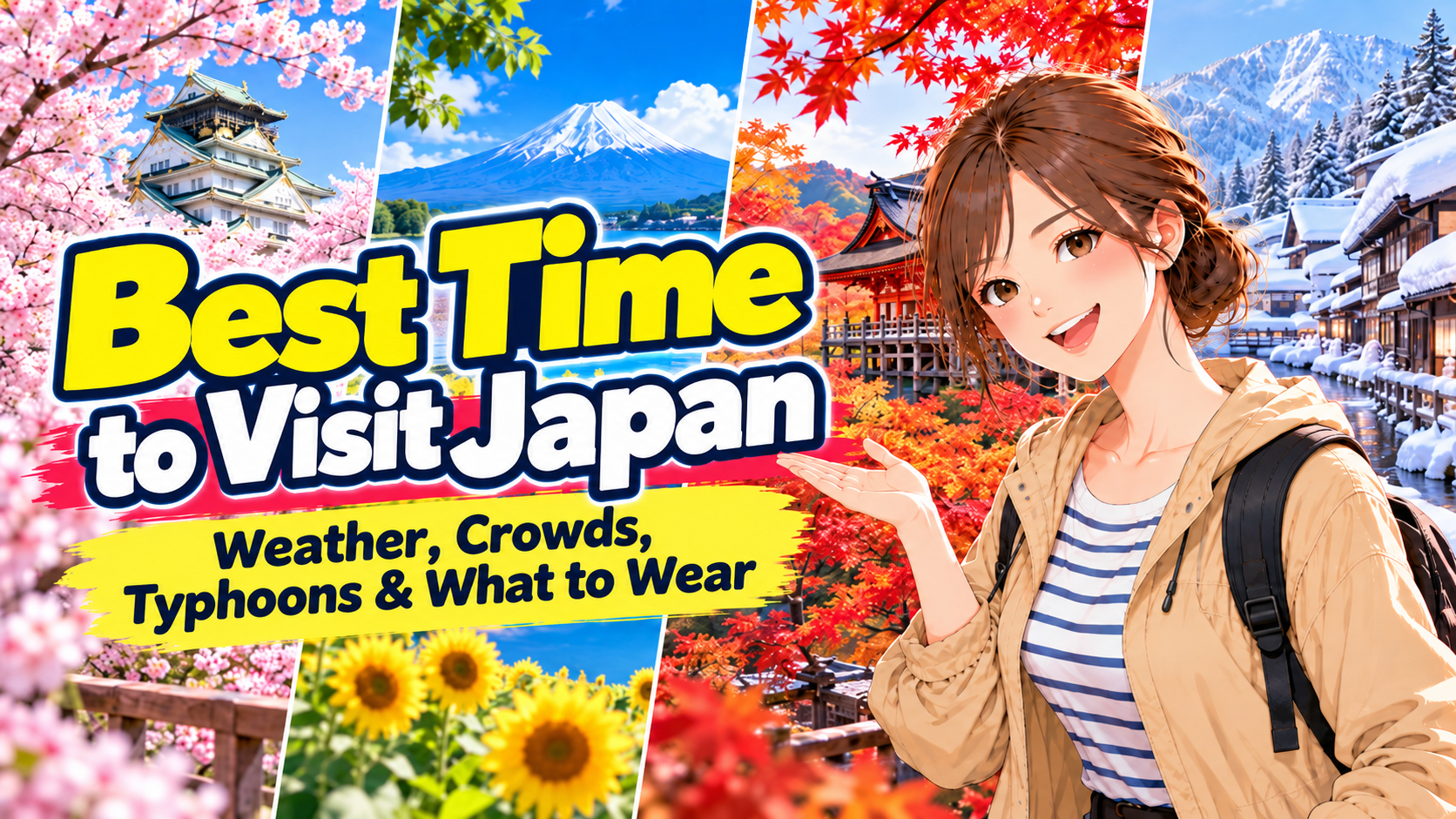
When planning a trip to Japan, have you ever wondered, “What’s the best month to visit?”
Spring for cherry blossoms, autumn for fall foliage.
But if you choose your travel dates based on the weather alone, you might run into crowds during Japan’s major holiday periods, or find yourself traveling during the rainy or typhoon season.
If it’s your first trip to Japan and you want to explore Tokyo, Osaka, Kyoto, and other cities, we recommend late March through April, the period after Japan’s major Golden Week holidays through late May, or late October through November.
Of course, it’s a different story if there’s something specific you want to enjoy, such as cherry blossoms, snow, summer festivals, or fireworks.
In this article, we’ll go through Japan’s weather throughout the year, major holiday periods, typhoons, regional climate differences, and what to wear.
- When Is the Best Time to Visit Japan? The Short Answer
- Japan’s Weather, Crowds, and Clothing: A 12-Month Overview
- When Japanese Travelers Hit the Road: Don’t Book Without Checking the Major Holidays
- How Much Do Rainy Season and Typhoons Affect Your Trip?
- The Best Time to Visit Differs Between Tokyo, Kyoto, Osaka, Hokkaido, and Okinawa
- Choose Your Clothes Based on Temperatures, Not Just the Season
- What If You’ve Already Decided Which Month to Visit?
- What Should You Check Before Choosing Your Travel Dates?
- Conclusion: Choose When to Visit Japan Based on What You Want to Experience
When Is the Best Time to Visit Japan? The Short Answer
Your options become much clearer once you decide what matters most to you.
- For comfortable sightseeing: Late March through April, after the major holiday period in May through late May, or late October through November
- For cherry blossoms: Late March to early April is the usual guideline for Tokyo, Osaka, and Kyoto
- For summer festivals and fireworks: July and August. But you’ll need to prepare for the heat
- For fall foliage: It depends on the location, but the second half of November is one guideline for urban areas such as Tokyo and Kyoto
- For snowy scenery, skiing, or snowboarding: Mainly December through March. January and February are especially recommended if you’re after powder snow
On the other hand, if seeing cherry blossoms or fall foliage is your top priority, choose your dates based on when they’re expected to be at their best rather than on comfortable temperatures.
Peak viewing times vary by region and by the year’s weather, so don’t assume you’ll definitely see cherry blossoms in early April.
Japan’s Weather, Crowds, and Clothing: A 12-Month Overview
First, here’s a look at the entire year.
The temperatures below are actual observations for Tokyo in 2025, published by the Japan Meteorological Agency (JMA).
Along with each month’s average temperature, we’ve included the lowest and highest temperatures actually recorded during that month.
If you don’t like crowds, I recommend avoiding Japan’s holiday periods!
| Month | Tokyo Temperatures |
|---|---|
| January |
Average: 6.6°CLow–high: −0.2–15.6°C
|
| Cold weather. New Year holiday period. In early January, shrines and temples across Japan are crowded with people making their first visits of the new year. Bring a coat, scarf, and other warm clothing. | |
| February |
Average: 6.5°CLow–high: −1.0–17.6°C
|
| Winter cold continues, and some days are colder than in January. Good for skiing and snowboarding. Warm clothing is essential. | |
| March |
Average: 10.7°CLow–high: 0.4–25.9°C
|
| Big temperature changes. Cherry blossom season may begin in late March. Bring a jacket and clothes you can layer. | |
| April |
Average: 15.6°CLow–high: 4.1–27.8°C
|
| In some years, cherry blossoms in Tokyo are at their best in early April. Popular blossom spots get crowded. Mornings and evenings can be chilly, so bring a light jacket. | |
| May |
Average: 19.2°CLow–high: 11.6–31.1°C
|
| Traveling after the major holiday period is recommended. Short sleeves or a light jacket during the day. | |
| June |
Average: 24.7°CLow–high: 15.0–34.8°C
|
| Across much of Japan, except Hokkaido, this is rainy season. Prepare for humidity and rain with light clothing and rain gear. In Okinawa, the rainy season ends during June in some years. | |
| July |
Average: 28.4°CLow–high: 20.7–36.4°C
|
| The heat intensifies after the rainy season. Some days reach 35°C or higher. Summer festival season. Short sleeves are fine. | |
| August |
Average: 29.6°CLow–high: 23.8–38.5°C
|
| Extremely hot days exceed 35°C, sometimes approaching 40°C. Obon holiday period; watch out for typhoons. Summer festivals and fireworks. Wear light clothing and protect yourself from the sun. | |
| September |
Average: 26.5°CLow–high: 17.9–37.0°C
|
| Lingering summer heat and typhoon risk. There may also be a long holiday period. Short sleeves are fine. Bring rain gear, too. | |
| October |
Average: 18.5°CLow–high: 9.7–29.3°C
|
| A good time to travel, though some days are rainy. Temperatures vary greatly. You may be comfortable in short sleeves early in the month, but mornings and evenings get colder from mid-October onward, so you’ll need a jacket. | |
| November |
Average: 12.8°CLow–high: 5.1–22.4°C
|
| Fall foliage reaches its peak in some areas. Mornings and evenings are cold, so bring a jacket or light outer layer. | |
| December |
Average: 8.4°CLow–high: −0.3–20.0°C
|
| Winter cold sets in. Many people travel during the year-end and New Year holiday period. Bring a coat and other warm clothing. | |
January–February: Cold, but Great for Snow and Hot Springs
January and February are winter months. Hokkaido, Tohoku, and areas along the Sea of Japan can get heavy snow.
It’s an appealing season if you want to enjoy snowy scenery, skiing, or hot springs.
Even if you’re not going skiing or snowboarding, watch out for travel disruptions caused by heavy snow in winter.
In Hokkaido, Tohoku, and areas along the Sea of Japan, snow can delay or cancel flights, trains, and buses.
Even when Tokyo or Osaka has clear skies, snow along your route can force Shinkansen bullet trains to slow down or stop running.
If you’re traveling between cities in winter, check the JMA’s snow forecasts (English) and weather warnings (English) for your destination and route before departure. Then check the official website of your airline, railway, or bus company for the status of your specific flight or route.
Above all, avoid scheduling a long journey to the airport on the same day as your flight home. Leave some room in your itinerary.
March–April: Cherry Blossom Season, but Watch the Temperatures and Crowds
Cherry blossoms start blooming and reach full bloom on different dates each year, so catching them at their peak during a short trip isn’t easy.
Even in April, Hokkaido can still be chilly, and some places there don’t reach cherry blossom season until late April or May.
Cherry blossoms don’t appear across all of Japan at the same time.
Popular cherry blossom spots attract visitors from Japan and abroad.
If cherry blossoms are your main goal, choose spring and be prepared for crowds. If a comfortable trip matters more, it’s also fine to travel outside cherry blossom season.
May–June: Visit After Golden Week, but Watch for the Rainy Season
Even when May is comfortable for walking around Tokyo, Osaka, and Kyoto, Okinawa may already be in its rainy season, which starts earlier than on Japan’s main islands.
June is also rainy season in cities such as Tokyo, Kyoto, and Osaka.
Including museums and other indoor attractions you can visit on rainy days makes it easier to plan your itinerary.
July–August: Intense Heat, but Plenty of Summer Experiences
Japan’s summer is humid, so walking around Tokyo, Osaka, or Kyoto for long periods can feel even more exhausting than the temperature suggests.
On the other hand, summer festivals and fireworks displays are experiences you can enjoy at this time of year.
If you’re set on visiting in summer, we recommend spending the middle of the day indoors and scheduling outdoor sightseeing for mornings or evenings.
Avoid walking outdoors for long periods in the blazing heat. Drink water regularly, and take breaks somewhere air-conditioned on hot days.
September–October: The Start of Autumn, but Watch for Typhoons and Rain
September may be autumn on the calendar, but Tokyo, Osaka, and Kyoto can still have hot days.
If you pack only long sleeves because you think it won’t be as hot as August, you may find yourself uncomfortable.
October gradually gets cooler and more comfortable for walking around cities. But that doesn’t mean every day in October will be sunny.
Check for rain or typhoon forecasts before you leave.
November–December: Fall Foliage and the Start of Winter
Fall colors appear first in colder areas such as Hokkaido and the mountains. In Tokyo and Kyoto, many places usually reach their peak in the second half of November.
Kyoto’s famous fall foliage spots get crowded at this time.
In December, you can enjoy Christmas-season illuminations, but you’ll also need warm clothing.
When Japanese Travelers Hit the Road: Don’t Book Without Checking the Major Holidays
One thing international visitors can easily overlook is when people in Japan take time off.
During these periods, tourist attractions, Shinkansen bullet trains, domestic flights, and accommodations can all be crowded.
Golden Week: Late April to Early May
In Japan, Golden Week is centered around Showa Day on April 29 and the public holidays from May 3 to May 5.
Depending on how the dates line up with weekends and substitute holidays, it can become an extended break.
Many people in Japan travel during this period, so popular tourist attractions, long-distance transportation, and hotels can be crowded.
If you’re taking the Shinkansen from Tokyo to Kyoto, Osaka, Hiroshima, or elsewhere, book your preferred train early.
If you can choose your dates freely, we recommend skipping Golden Week and traveling after the holiday period in May instead.
Obon: Mid-August
Obon is a Japanese custom when people return to their family homes or gather with relatives.
Many companies schedule summer holidays around August 13–16 each year.
Obon itself is not a nationwide public holiday.
Even so, family visits and domestic travel increase sharply, particularly affecting long-distance transportation.
If you’re traveling in Japan during this period, decide on your intercity travel dates and accommodations first, then check availability for Shinkansen trains, domestic flights, and hotels.
Silver Week in September: Not the Same Length Every Year
September includes Respect for the Aged Day and the Autumnal Equinox holiday.
Depending on the days of the week, an additional holiday may fall between them, creating a longer break.
For example, September 19–23 formed a five-day holiday period in 2026. But September doesn’t have the same length of holiday break every year.
Year-End and New Year Holidays: Late December to Early January
During Japan’s year-end and New Year holidays, people travel to visit family or make their first shrine or temple visit of the year.
Some restaurants, smaller shops, and other facilities close for several days or shorten their business hours.
On the other hand, you can experience seasonal Japanese customs, including the first shrine or temple visit of the year, known as hatsumode.
If you’re traveling during this period, look for “New Year holiday hours” or “holiday closures” on the official website of each place you want to visit. Compare those dates with the day you plan to go.
Don’t rely on normal business hours alone.
Cabinet Office: National Holidays in Japan
How Much Do Rainy Season and Typhoons Affect Your Trip?
During Japan’s rainy season, you can often adjust your sightseeing plans to the weather, and ordinary rain rarely causes major disruptions to public transportation.
However, intense downpours can still cause trains and buses to stop running.
When a typhoon approaches, flights may be canceled and trains, buses, Shinkansen bullet trains, and ferries may stop running. You could be unable to reach your planned destination.
Rainy Season: Can You Still Travel When It Rains So Often?
Japan’s rainy season takes place at different times depending on the region.
According to JMA’s climate normals, rainy season in the Kanto-Koshin region usually begins around June 7 and ends around July 19.
In Okinawa, it starts earlier, around May 10, and ends around June 21.
JMA does not announce rainy season start or end dates for Hokkaido, so Japan does not enter rainy season everywhere at the same time.
You can still travel, but there may be several rainy days in a row.
Typhoons: Will You Have to Cancel Your Trip?
Japan experiences many typhoons.
Typhoons and hurricanes are the same type of tropical cyclone; the name differs depending on where they form. Typhoons approach Japan particularly from summer into autumn.
If you can choose when to travel, we recommend avoiding August and September, when typhoons approach Japan more frequently.
In Okinawa and on remote islands especially, you may be unable to travel on the day you planned.
According to JMA records for the most recent five-year period (2021–2025), an average of 3.4 typhoons approached Japan in August and 3.0 in September each year.
These are figures for Japan as a whole. They do not mean the same number of typhoons approached your particular destination city.
Source: JMA | Number of Typhoons Approaching Japan
Of course, a typhoon won’t necessarily arrive during your trip in August or September. These months also offer experiences such as summer festivals and fireworks displays.
If you’re traveling during this period, leave some flexibility in your schedule.
Before departure, check the predicted path on the JMA’s typhoon information and compare it with the areas you plan to visit. Also check the official websites of the airlines, railway operators, and ferry companies you’ll use for the status of your specific services and routes.
If a typhoon approaches and conditions become dangerous, put safety ahead of sightseeing and change or cancel your plans.
A typhoon can delay or cancel your flight home, leaving you unable to return on the day you planned.
Especially as your departure date approaches, check the typhoon’s path and your airline’s flight status.
The Best Time to Visit Differs Between Tokyo, Kyoto, Osaka, Hokkaido, and Okinawa
Japan stretches a long way from north to south.
On the same day, you might be comfortable in light clothing in Tokyo but need a coat in Hokkaido.
If You’re Visiting Tokyo, Osaka, and Kyoto
If you’re traveling between Tokyo, Osaka, and Kyoto, think about how crowded the places you want to visit will be, not just the temperatures.
Kyoto’s fall foliage spots tend to be crowded in the second half of November. If you don’t like crowds, you could choose dates slightly outside peak foliage season.
If You’re Visiting Hokkaido
Hokkaido is colder than Japan’s main island, and the best time to visit depends greatly on whether you want to escape the summer heat or enjoy snowy winter scenery.
Don’t assume you can wear the same clothes you would in Tokyo.
Sapporo is much colder than Tokyo in winter, and you also need to prepare for snow accumulation and icy roads.
Along with warm clothing, bring shoes suitable for walking on snow.
If You’re Visiting Okinawa
Okinawa is warmer than Japan’s main island, and its winters aren’t as cold as Tokyo’s.
Even so, winter days in Okinawa can feel chilly, so bring a jacket.
Okinawa’s rainy season falls mainly in May and June, and typhoons can affect the region from summer into autumn.
Choose when to visit based on what you want to do in the sea, which island you’re going to, and the conditions for taking part in marine activities.
Choose Your Clothes Based on Temperatures, Not Just the Season
Japan has four seasons, but we don’t recommend assuming you’ll need light clothing just because it’s spring or long sleeves just because it’s autumn.
For example, Tokyo can be warm during the day in March but cold in the morning and evening.
Likewise, when you’re walking around Kyoto in November, the daytime can feel comfortable, but it may get cold after sunset.
When choosing what to pack, check both the forecast high and low temperatures for each city you’re visiting, not just the daytime high.
If you’re traveling from Tokyo to Sapporo, Okinawa, or other regions, check the forecast for each location separately.
As a rough guide, once it’s above 23°C, short sleeves can be comfortable!
What If It’s Colder or More Humid Than You Expected After Arriving in Japan?
If you arrive in Japan and find it’s colder than expected, you can buy some extra warm clothing.
On the other hand, during humid periods such as rainy season, the air may feel muggy even when the temperature isn’t particularly high.
In that case, we recommend breathable T-shirts or quick-drying clothes.
You can find UNIQLO, GU, Workman, and H&M stores using the official store locators below.
Search using the name or address of where you’re staying, and check each store’s location and opening hours.
- UNIQLO | Official Store Locator: Thermal underwear, jackets, and other outerwear
- Workman | Official Store Locator: Warm jackets and functional clothing
- GU | Official Store Locator: Sweaters and jackets
- H&M | Official Store Locator: Coats and sweaters
However, your preferred size or type of warm clothing may not always be available in-store.
If you’re visiting a particularly cold region, bring at least some basic winter clothing with you before arriving in Japan.
What If You’ve Already Decided Which Month to Visit?
If you’ve already booked your flight before learning about the heat, crowds, or bad weather risks, there’s no need to give up on your trip.
If you can’t change your travel dates, adjust your sightseeing hours and the way you plan your travel days instead.
You could choose some indoor attractions for rainy days, avoid spending the middle of hot days walking outdoors, or allow more time for long journeys in case of bad weather.
If typhoons or heavy snow could disrupt transportation, use the JNTO’s safety and transportation information (English) to find the official websites of the railway operators, airlines, and other companies you’ll use, then check the operating status of your specific flight or route.
What Should You Check Before Choosing Your Travel Dates?
When deciding when to visit, keep historical observations separate from the latest information for the year you’re traveling.
- Compare travel months: Check the low and high temperatures and rainfall for your destination cities using the JMA’s Historical Weather Data Search (official). Don’t treat Tokyo’s temperatures as representative of all of Japan.
- Avoid crowded dates: Check the dates for your travel year in the Cabinet Office’s list of national holidays, and compare them with your calendar to see whether your trip overlaps with Golden Week or September’s holiday period. Consider Obon and the year-end/New Year holidays separately.
- If you’re traveling for cherry blossoms or fall foliage: Check the expected peak viewing times for your destination using the Japan National Tourism Organization’s (JNTO) cherry blossom forecast and fall foliage forecast. Check again for updated predictions as your trip approaches.
- Adjust your clothes and travel plans as departure approaches: Check the forecast highs, lows, and rain for the cities you’re visiting in the JMA’s weekly weather forecast. If a typhoon forms, also check the typhoon information and the operating status of your airline and railway services.
Historical observations cannot guarantee the weather on a particular day in the future.
Use them to make an initial choice about when to travel, then make final adjustments based on the latest forecast.
Conclusion: Choose When to Visit Japan Based on What You Want to Experience
Choose your travel dates based on what you most want to enjoy in Japan.
If comfortable city sightseeing comes first, choose spring or late autumn. If you’re traveling for cherry blossoms, fireworks, or snowy scenery, choose the corresponding season.
Before settling on your dates, check Japan’s holiday periods and the weather. If you’ve already booked, adjust your packing and transportation plans to suit the season.
As the seasons change in Japan, even the same city takes on a different look.
I hope you find the Japan you want to experience!